

Nikko 2-Day Itinerary: The Best Way For Nature Lovers
Looking for a nature-filled weekend trip from Tokyo? This Nikko itinerary is a beautiful getaway to escape the hustle and bustle of city life.
Here in Nikko, you can visit several lakes, get close to the mountains and enjoy a Japanese hot bath experience in an onsen town. It is also well connected to Tokyo via train, making it a popular destination. Did you know that it is also a UNESCO World Heritage Site?
We had the opportunity to spend 2 days and 2 nights in Nikko during the summer season. The weather was much cooler than Tokyo, and we had a fun time hiking and enjoying the scenery as we cruised along the lake.
In this article, I will talk about things to do, how to get to Nikko from Tokyo, and also share our own 2-day itinerary. It will be more nature-centric so that you can spend more time exploring the outdoors.

By the way, do you love Japan? Read more:
- The Ultimate 9-Day Japan Itinerary: Osaka, Kyoto and Tokyo
- How To Explore Asakusa and Ueno For First-Timers
- Amazing Japan Hiking Trips For Mountains, Lakes and Islands
- A First Timer’s Guide To Hokkaido: Daisetsuzan & Furano
- 3 Days In Hokkaido Lake Camping & Onsen Hopping
- Sapporo 1 Day Itinerary (Fun Guide To Bicycle Sightseeing)
- 9 Unique Souvenirs To Buy From Japan That You’ll Actually Want
- Unforgettable Food You Need To Try in Tokyo
- Beautiful Tokyo Hiking Day Trips You Need To Try In Summer
- How To Go Hiking In Mount Takao: 8 Trails To Explore
This article uses affiliate links where I make a small commission if you make a purchase through my links, at no additional cost to you. As an Amazon Associate I earn from qualifying purchases.
How many days should you spend in Nikko?
Although Nikko is a popular destination for day trips, I think you will need at least 2 days to enjoy it at a relaxed pace.
Firstly, you need some time on the first day to arrange luggage forwarding in the morning, and then travel about 2 hours from Tokyo to Nikko. After that, you should spend some time checking out the shrines before making your way to a lakeside town which will take almost 1 hour by bus.
The next day, you can fully immerse in the hiking, sightseeing and lake cruise experience from early morning. This way, you can beat the day trip crowd from Tokyo that starts streaming in from around 9:30am.
Finally, you can stay overnight in either Yumoto Onsen or downtown Nikko (near the train station). Alternatively, take the train back to Tokyo that evening.
Should you do a day trip to Nikko?
Sure, a day trip would be fine if you don’t wish to go too far into Nikko National Park.
A day trip will give you enough time to see the famous shrines and temples, enjoy a panoramic view of Nikko’s Chuzenji Lake and Kegon Falls from a viewpoint. You can also have lunch at the relaxing lakeside town. If you have even more time, you can even squeeze in a cruise ride on the lake.
However, the last trips for the cruise ride and the cable car ride up to the observation point can be as early as 3:30pm. This means that you will need to take note of the travel time from the Chuzenji Lake back to Nikko train station. Although we did not experience this, I saw comments online about how people missed their trains in the past because some buses were delayed during peak travel seasons.
Hence, you should give yourself enough buffer for the travel time. Alternatively, you could opt to rent a car within Nikko which avoids the hassle of meeting bus timings. Even then, I guess the roads could still be crowded when it’s time to leave the area.
If you are doing a day trip, be sure to pre-purchase train tickets and take note of all the bus timings. Personally, this feels a little bit rushed and I am the type of person who will be so caught up with the timings that I cannot relax properly.
That’s why I will be recommending at least 2 days in Nikko.

When is the best time to visit Nikko?
Obviously spring or autumn are amazing seasons to visit Nikko because of the cherry blossoms or “momiji” autumn foliage.
During summer, Nikko will be slightly cooler than Tokyo, making it a great escape from the heat of the urban jungle. At this time, flowers are blooming, and you can do water sports like paddle boarding on the lake and rafting in a river. There are also summer festivals where you can watch fireworks (just like in Hokkaido)!
Winter offers majestic snowy mountain views from various places in Nikko. It is the best time to book a ryokan stay and enjoy the onsen experience.
How to get to Nikko from Tokyo
There are 2 main train stations in Nikko: Tobu Nikko station and JR Nikko station. Whichever type of train transport you choose, I recommend checking train schedules in advance. If you are planning your Nikko itinerary on weekends or peak periods, it is a good idea to reserve seats for peace of mind.
Asakusa to Tobu Nikko station via Tobu Limited Express Train (Preferred)
- Cost: 3,300 Yen (excluding Nikko Pass cost)
- Travel time: 1 hour 50 minutes (direct from Asakusa)
- Train frequency: once every 1-2 hours
The most popular and cost efficient way to travel to Nikko from Tokyo is via the Tobu Railway. Starting from Asakusa station, you can take a direct limited express train to Tobu Nikko station. It will take only 1 hour and 50 minutes this way, and with a train service frequency of once every 1-2 hours.
This requires you to purchase a Nikko Pass which covers your return train journey (local train only). You then need to purchase an add-on limited express ticket of 1,650 Yen each way. You can do this by using the ticketing machines at the station, or by asking the train staff to help you with it.
Without the pass, you can expect to pay 3,050 Yen each way for the same limited express train. Taking the local trains is not preferred as it usually involves several train changes and longer travel time. I will also explain more later about whether a Nikko Pass is worth it, after considering how to get around within the Nikko area.
Shinjuku or Ikebukuro to Tobu Nikko station via Japan Rail Regional Pass
- Cost: Free (included in JR Tokyo Wide Pass or JR East regional passes)
- Travel time: 2 hours (direct from Shinjuku)
The nationwide Japan Rail Pass can be used to get discounted travel from Shinjuku to Tobu Nikko station. However, it does not cover the entire fare cost as this journey makes use of Tobu Railway tracks. Hence, you will also need to top up the difference at some point.
Can you use Japan Rail Pass to travel from Tokyo to Nikko?
Yes, you could take the JR Tohoku Shinkansen from Tokyo or Ueno station, make a transfer at Utsunomiya Station to get to JR Nikko station. This is a good option only for those who have already bought the Japan Rail Pass, as the original ticket price will be upwards of 5,000 Yen without it.
- Cost: Free (included in JR Pass)
- Travel time: 2.5 to 3 hours (from Tokyo or Ueno with transfer)
Driving from Tokyo to Nikko
- Cost: 5,000 to 10,000 Yen per day (depending on car model)
- Travel time: 2 to 3 hours (depending on traffic)
If you prefer to drive, it is possible to rent a car to drive to and around Nikko. It gives you more flexibility as you don’t need to wait for specific train times. This way, you can easily bring baggage along. This avoids the hassle of bringing them through busy trains and stations.

Getting around Nikko National Park
You can either drive around Nikko or hop on and off the Tobu buses that operate throughout the Nikko area.
Renting a car in Nikko
Although it could be more cost effective to purchase an unlimited multi-day Nikko Pass, larger families may benefit from renting a car. There are several car rental shops in Nikko and you can find them near Tobu Nikko train station. You can also browse on Rentalcars.com.
Explore Nikko via Tobu bus
There are shuttle bus services running at regular intervals throughout Nikko. Each route has an alphabet and color associated with it. There are 4 main areas that are covered by the buses.
- Nikko Heritage Area
- Chuzenji Lake
- Yumoto Onsen
- Kinugawa Onsen
Nikko Heritage Area is just 20 to 30 minutes from the train station in downtown Nikko. It is the most popular site for most people who visit. This is where the famous shrines, temples and Shinkyo Bridge are located. Hence, most buses will pass through here with relatively high frequency.
The journey from Nikko Heritage Area to Chuzenji Lake takes a winding road up as you gain altitude. There are several dining and accommodation options here, including the Ritz-Carlton Nikko. You can also take the buses further in towards Yumoto Onsen town where it is much quieter and less crowded.
The Tobu bus also takes you to Kinugawa Onsen town which is east of Tobu Nikko station. There, you can also explore Edo Wonderland as well as Tobu World Square.
You can pay for these bus rides either by showing your discount bus ticket, a Nikko area pass, or by tapping your prepaid transport card (ICOCA, SUICA, etc).
Do also take note of the correct bus code when planning your Nikko itinerary. This Nikko bus codes can be identified by the alphabet, color, or final destination. For example, bus C has the red color code, and is headed for Chuzenji Onsen (via Akechidaira) as the final destination. Check out this Tobu bus map for more details.


Should you buy any Nikko Area Passes for your itinerary?
We prefer the Nikko All Area Pass that is valid for 4 days and covers the widest area among other options.
The Nikko Area Passes generally include unlimited bus rides in the chosen region – either All Area or just the World Heritage Area. These will also include return tickets on local trains, and you will only have to add on 1,650 Yen each way for the limited express trains. Most people opt to pay for this add-on to make full use of the Nikko Pass benefits.
You can purchase digital tickets for the Nikko Area Passes online via Klook, or order them for physical ticket collection at Asakusa station. You just need to show the Nikko Pass to the train ticketing staff and bus drivers upon boarding. I prefer having digital tickets so that I will not lose or misplace them during the trip.
What about Nikko Unlimited Bus Ticket Passes?
You can also consider discount bus passes like the Chuzenji Onsen or Yumoto Onsen free passes. However, these are offered by the Tobu bus company and do not cover your train rides. They can be purchased at Tobu Nikko station or JR Nikko station.
If you plan on staying for at least 2 days and going all the way to Yumoto Onsen, I recommend getting the Nikko All Area Pass. It gives you the best outdoors experience, offers discounted train tickets, and has up to 4 days of validity for unlimited bus rides in Nikko. This is great for those who want to consider extending their stay in Nikko, or even to make a side trip to Edo Wonderland.
As you can see from the sample Nikko itinerary below, the Nikko All Area Pass gives you the most value for money. You can also do your own analysis by using Google Maps cost estimation, and checking the bus coverage on the official Tobu website.
| Sample 2-day Itinerary (Apr to Nov) | Nikko All Area Pass | World Heritage Area Pass | Yumoto Onsen Free Pass | Without Pass | Chuzenji Onsen Free Pass |
| Type of discount | Area Pass | Area Pass | Unlimited Bus Ticket Pass | – | Unlimited Bus Ticket Pass |
| Validity | 4 days | 2 days | 2 days | – | 2 days |
| Price of discount pass | 4,780 | 2,120 | 3,500 | – | 2,300 |
| Limited Express Train from Asakusa to Nikko | 3,300 | 3,300 | 6,100 | 6,100 | 6,100 |
| Day 1 | |||||
| Tobu Nikko to Chuzenji Lake | – | 1,100 | – | 1,300 | – |
| Cruise Ride | – | 650 | 650 | 650 | 650 |
| Day 2 | |||||
| Chuzenji Onsen to Ryuzu Falls | – | 490 | – | 490 | 490 |
| Yutaki Falls to Yumoto Onsen | – | 240 | – | 240 | 240 |
| Yumoto Onsen to Tobu Nikko | – | 1,950 | – | 1,950 | 1,000 |
| Total Cost | 8,080 | 9,850 | 10,250 | 10,730 | 10,780 |
Recommended Nikko 2-day Itinerary
Through this Nikko itinerary, you get to enjoy the beautiful natural Nikko landscapes that coexist with its rich cultural history. Hiking through nature also takes you away from the main tourist crowds, a time where you can enjoy peace and quiet.
Things to prepare for this Nikko Itinerary
What do you need for you 2-day trip to Nikko? Aside from your clothes, here are other essential items to prepare.
- Nikko All Area Pass (Digital Ticket via Klook)
- Limited Express add-on ticket
- Smaller packed bag for a short trip
- Sun protection
- Motion sickness pills (for the bus ride)
- Cash for train tickets and dining
1. Begin Nikko itinerary with train ride from Asakusa to Tobu Nikko station
It is a good idea to wake up earlier to make Yamato luggage forwarding arrangements with your hotel reception just as you check out. There are fixed timings for the direct limited express trains from Tobu Asakusa to Tobu Nikko, which you can check the night before. It is good to arrive at the station 30 minutes before the train departs so that you can make sure you’re at the right platform, and to buffer for any delays.
There are hardly any shops within Tobu Asakusa station so I recommend buying breakfast beforehand. If you prefer to have brunch, it would be a cool experience to bring a bento box meal on board.


When you get to the Tobu Asakusa platform entrance, simply take your Nikko All Area Pass and the limited express add-on ticket to the staff. They will check that you have the required tickets and then signal for you to enter.
Don’t be shy to ask the train staff if you are at the correct door and platform for your reserved seat. It is also important to be at the correct car number because some train models allow for some sections to detach mid-journey.


We took the Kegon Revaty train that departed from Asakusa at 11am. The handicap toilet is really huge and there was ample leg space. You can even charge your devices on the seat with a USB charger.
We also found out that they have a new train model that was launched in July, called the Spacia X. It was parked at the Tobu Nikko station when we arrived, and it looks really impressive! There are differentiated seating classes and we even saw a bar in one of the premium sections.
2. Lunch at Yuba restaurant
Once you arrive at Tobu Nikko station, you will have plenty of options for lunch. One of the must-try food in Nikko would be Yuba. It is essentially a dish made with by-products of tofu and you can feel its unique texture with each bite.
We went to 特製ゆば丼 and we were seated on the second floor. From there, we could see the mountains in the distance and it was such a amazing sight. I can only imagine how beautiful it will be in winter. You can try the Yuba cooked with egg or a tempura version of it. The gravy was tasty and even though we did not order meat, the meal was surprisingly filling.


3. Explore heritage shrines and cultural walks
Since we have our Nikko All Area Pass, we can easily hop on any bus. Starting our journey from the Tobu Nikko station bus interchange, we took a short 5 minute bus ride to Shinkyo Bridge. This red bridge is probably the first attraction you see in Nikko, and is probably popular for that reason.
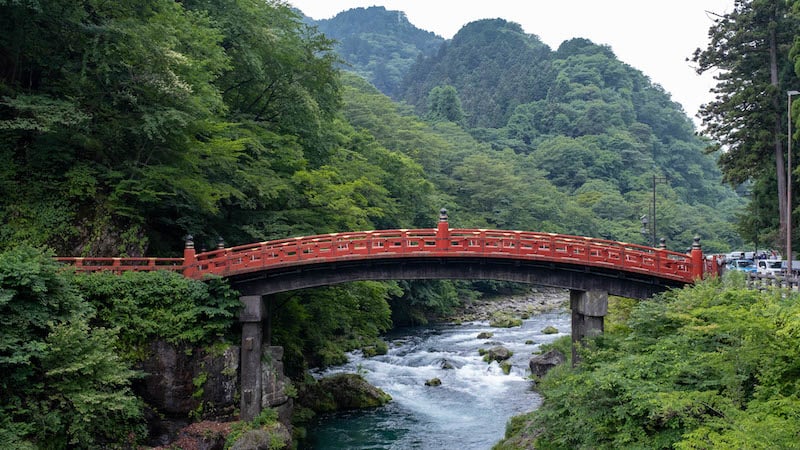
From there, you can also begin exploring Nikkozan Rinnoji Temple, Toshogu Shrine and Nikko Futarasan jinja. There will be admission fees for these shrines as the Nikko Passes does not cover them. In addition, the last entry time will be 30 minutes before the closing time.
Outside of the temples, there is a river running through the gorge which was formed after Mount Nantai’s eruption. Kamangafuchi Abyss is a stunning I riverside walk featuring about 70 stone statues. You can take a peaceful walk and admire the quiet atmosphere along this moss-covered path.


Shinkyo Bridge
- Bus routes to get there: W/C/Y/YK/H/HY/M/N
Nikkozan Rinnoji Temple
- Opening hours: 8am to 5pm (Apr-Oct), 8am to 4pm (Nov-Mar)
- Admission fee: 400 Yen for adults, 200 Yen for children
- Bus routes to get there: W
Toshogu Shrine
- Opening hours: 9am to 5pm (Apr-Oct), 8am to 4pm (Nov-Mar)
- Admission fee: 1,300 Yen for adults, 450 Yen for children
- Bus routes to get there: W
Nikko Futarasan jinja
- Opening hours: 8am to 5pm (Apr-Oct), 8am to 4pm (Nov-Mar)
- Admission fee: 300 Yen
- Bus routes to get there: W
Kamangafuchi Abyss
- Opening hours: 24 hours
- Admission fee: Free
- Bus routes to get there: C/Y/YK/H/HY/M
4. Explore Kegon Falls and Lake Chuzenji views
Next, we hop on the bus that takes us through the winding Irohazaka roads. It consists of 48 turns that bring you into the Okunikko region. Lake Chuzenji sits right at the edge of a cliff that drops off as the mighty Kegon Falls. The journey up can take around 30 minutes or longer so if you are prone to motion sickness, do bring some medication along.


To get a birds eye view of both Lake Chuzenji and Kegon Falls, you can take the 3-minute cablecar ride up to the Akechidaira observation platform. It offers stunning views of the natural scenery and it looks different throughout the year. Sometimes a heavy fog can roll in, causing poor visibility from the Akechidaira observation platform.
You can also get close to Kegon Falls via the lower observation deck which requires an entrance fee. Although there are photo spots along the public street, it might be easier to get an unblocked view of the waterfall in the paid area. There was a gashapon machine nearby dispensing souvenir pins depicting Kegon Falls in different seasons. What a way to remember the view.


Akechidaira Ropeway
- Opening hours: 8:40am to 3:30pm (Apr-Nov), 9am to 3:30pm (Dec-Mar)
- Admission fee: 600 single/1,000 Yen round trip for adults, 300 single/500 Yen round trip for children
- Bus routes to get there: C/Y/YK
Kegon Falls Lower Observation Deck
- Opening hours: 8am to 5pm (May-Nov), 9am to 5pm (Mar-Apr), 9am to 4:30pm (Dec-Feb)
- Admission fee: 570 Yen for adults, 340 Yen for children
- Bus routes to get there: C/Y/YK
5. Overnight in the town of Lake Chuzenji
Finally, it’s time to check in to your accommodation in this lakeside town. There are several dining options and we were recommended by a local to try out Tonkatsu Asai. It is a quiet town so most places close early at around 6pm. To wind down, take a slow walk along the lake as you enjoy the sunset against the mountain backdrop.
6. Lake Chuzenji sightseeing cruise to Shobugahama Pier
After breakfast, head to Chuzenji Ferry Terminal to catch the hourly cruise rides across Lake Chuzenji. If you have the Nikko All Area Pass, the cruise tickets are already included and you just need to show your pass to obtain it.
This cruise passes through several piers, and we will be taking a one-way journey to Shobugahama Pier. However, they may stop the cruise services in the event of inclement weather.
You can also choose to stay on the boat and wait for it to make the loop back to the starting point. The All Area Pass would cover a round trip cruise ride, so you can also get off, walk around, and then take the next cruise back.


There is a recorded tour description of the vicinity and its history as we cruise along Lake Chuzenji. You can see Mount Nantai towering over the lake, as well as some shrines located nearby. There are also some people fishing, stand up paddle boarding. It just feels so relaxing here.
- Opening hours: 9:30am to 3:30pm (Apr-Nov), closed the rest of the year
- Admission fee: 650 Yen to Shobugahama Pier/1,400 Yen for round trip
- Bus routes to get there: Y/YK
7. Hike from Ryuzu Falls to Yutaki Falls through Senjogahara Marshland
This brings us to the hiking portion of our Nikko itinerary to complete the experience. The Ryuzu Falls to Yutaki Falls hike is easy to do, and it takes around 2 to 2.5 hours to complete. There is little elevation gain and most of the hike involves walking through shaded forests and marshland boardwalks.


If you are visiting in autumn, the Senjogahara Marshland will turn a gorgeous shade of orange. You can also see the mountains surrounding the marshland from almost all parts of the trail. There are many rest stops along the way which are perfect for a lunch break.


Do pack some snacks and water for this journey, and remember to bring trash out with you. You can check this hiking map for the various routes in the region as well as toilet stops. We will be following the red trail called the Senjogahara Hiking Course from Ryuzu Falls to Yutaki Falls.


Ryuzu Falls and Yutaki Falls
- Opening hours: 24 hours
- Admission fee: Free
- Bus routes to get there: Y/YK
8. Overnight ryokan stay in Yumoto Onsen
From Yutaki Falls, you can either continue hiking along Lake Yunoko, or take a bus to Yumoto Onsen town. To reach the bus stop near Yutaki Falls, you need to walk out to the carpark and then further out onto the main road. Don’t forget to look out at the view of Lake Yunoko from the bus. It is a smaller lake compared to Lake Chuzenji, and there were locals fishing there as well.
Yumoto Onsen is a town with several resorts that have onsens for guests to enjoy. This is even more rewarding when you have just completed a hike during the day. Now it’s time to sit back and relax in this quiet town. There are not many dining options here, but it is not an issue because each resort will cater meals to the guests.


If you are not planning to stay overnight in Yumoto Onsen, there is a public foot bath you can visit. It is called あんよの湯 Anyo No Yu and has running hot water flowing through the 3 different sections. Each section has a different depth, starting from ankle height up to your calf. There is a public toilet there as well.
9. End of Nikko Itinerary, return to Asakusa
Alas, it’s time to head back to Tokyo after a relaxing time in Nikko National Park. To round off this 2-day Nikko Itinerary, head back to Tobu Nikko station to catch the train bound for Tobu Asakusa. The journey from Yumoto Onsen back to Tobu Nikko station takes about 50 minutes, but it could be slower during busy periods.


I recommend buying the limited express add-on tickets only when you reach Tobu Nikko station on the last day instead of pre-purchasing them. This way, you get some flexibility and will not have to stress over missing your train in case of bus delays.
In the unfortunate event where you missed the last train for the day, check for accommodations nearby in downtown Nikko. We enjoyed staying at Nikko Guesthouse Sumica during our last visit there due its proximity to Nikko station and the affordable Tatami-style bedroom.
Final tips for your Nikko Itinerary
- Start your day as early as possible to avoid crowds
- Purchase your Nikko All Area Pass in advance
- Have the bus maps and train schedules handy so you don’t miss your ride
- Pack light
- Have an early dinner as shops close early
I would also love to head there in autumn or winter to experience the stunning landscape changes. It is amazing how such an amazing cultural and natural gem can exist just 2 hours outside Tokyo. If you haven’t visited Nikko National Park yet, this is your sign!
If you love quiet mountain towns like Nikko, you’ll also enjoy Hakuba. Here’s a guide on the best things to do in Hakuba during fall.


Hello, thanks so much for this blog post! May I ask for the Lake Chuzenji cruise ship, with the All Area Pass, can we do an unlimited cruise trip where we hop off and on as many times as we want? Or is it purely a one-way trip only?
Hi Jan, thanks for your comment, hopefully the blog post helps you with planning! With the All Area Pass you can hop on and off at any point. In other words, you can get off at any pier, walk around a bit and then come back to catch the next boat. Just make sure to take note of the cruise timings so you don’t miss the last ride.
We didn’t take the boat back because we were hiking beyond the cruise hours.
Hello, thank you for your review and very detailed information. I would like to ask if I buy Nikko pass all area via Klook, do I need to exchange the voucher for a physical ticket at station or I just show the Klook voucher to the station staff. Thanks
Hi! If you buy the digital ticket then you can just show the phone screen to the station staff, no need for physical ticket exchange. Have a great trip!
Great! Thank you for your reply 🙂
Amazing and very well explained. Thank you for all the information. I will be in japan in summer (august). Lots of people advise me is not the best time but is the only time I got. I will try scape for Nikko for 3 nights.
Thank you for your comment! Summer may be warm, but there’s lots to do in nature! Nikko should be colder than Tokyo – good idea!
Thanks for your itinerary! was super helpful guiding me on what to do for Nikko!
dear Janice.
it is a nice write up and detailed explanation to all my doubts about Nikko.
i actually would like to ask you about our lugage. im staying in Asakusa however might have 2 nights at Nikko. while at Nikko, do you know if i can store my lugage with Asakusa hotel as i will be back to this hotel again after i come back from Nikko. i have been searching about storing your lugage with hotel while you away and searching up for the fee as well. however, i couldnt find any and would like to know if you can share me your experience about lugage.
to ease my burdens on lugage, i actually plan to have day trip to Nikko but i really wanted to stay 1 night there so that i an enjoy to the fullest.
thanks,
Greetings from SIngapore,
Fifi
Hi Fifi, we initially had this dilemma as well, but decided to forward our luggage to the airport because our visit to Nikko was near the end of our stay in Tokyo. You could probably store your luggage at the Asakusa train station too! If your hotel can help you to store – that might be perfect (best way is to ask them directly).