

12 Best Things To Do In Hakuba: Fall Hidden Gems You Need To See
Looking for the best things to do in Hakuba during fall? You might be surprised by how beautiful and underrated this season is. Most travelers think of Hakuba as a winter ski town, but between late September and early November it’s a hidden gem for colorful foliage and scenic hikes.
After my fall trip to Hakuba, I’m convinced Hakuba is one of the best fall destinations in Japan. This mountain town has got everything you’d want for a relaxing nature getaway.
With beginner-friendly hiking trails like Happo Pond, onsen hot springs, and several nearby lakes, there’s so much to do here. It’s also very easy to access from Tokyo, making it perfect for a relaxing trip out of the busy city.
Here are the best things to do in Hakuba during fall, plus tips on how to get from Tokyo to Hakuba.
Disclaimer: This trip was sponsored by Happo-One Ski Resort (Hakuba Valley), but all opinions are my own.
This article uses affiliate links where I make a small commission if you make a purchase through my links, at no additional cost to you. As an Amazon Associate I earn from qualifying purchases.
Quick links to plan your Hakuba trip
🚙 Book a rental car
🚅 Stay connected with a reliable eSIM
🛌 Book a hotel: I recommend Hakuba Mominoki Hotel
Things to do in Hakuba Happo-One
Hakuba Valley has 10 ski resorts, with the largest and most popular being Happo-One. In fall, those same lifts become the gateway to incredible mountain views and hikes. Visiting during the “Green Season” offers lots of outdoor activities for all fitness levels, with the Happo Alpen Line (gondola and chair lifts) open from June through October.

1. Hike to Happo Pond (and beyond)
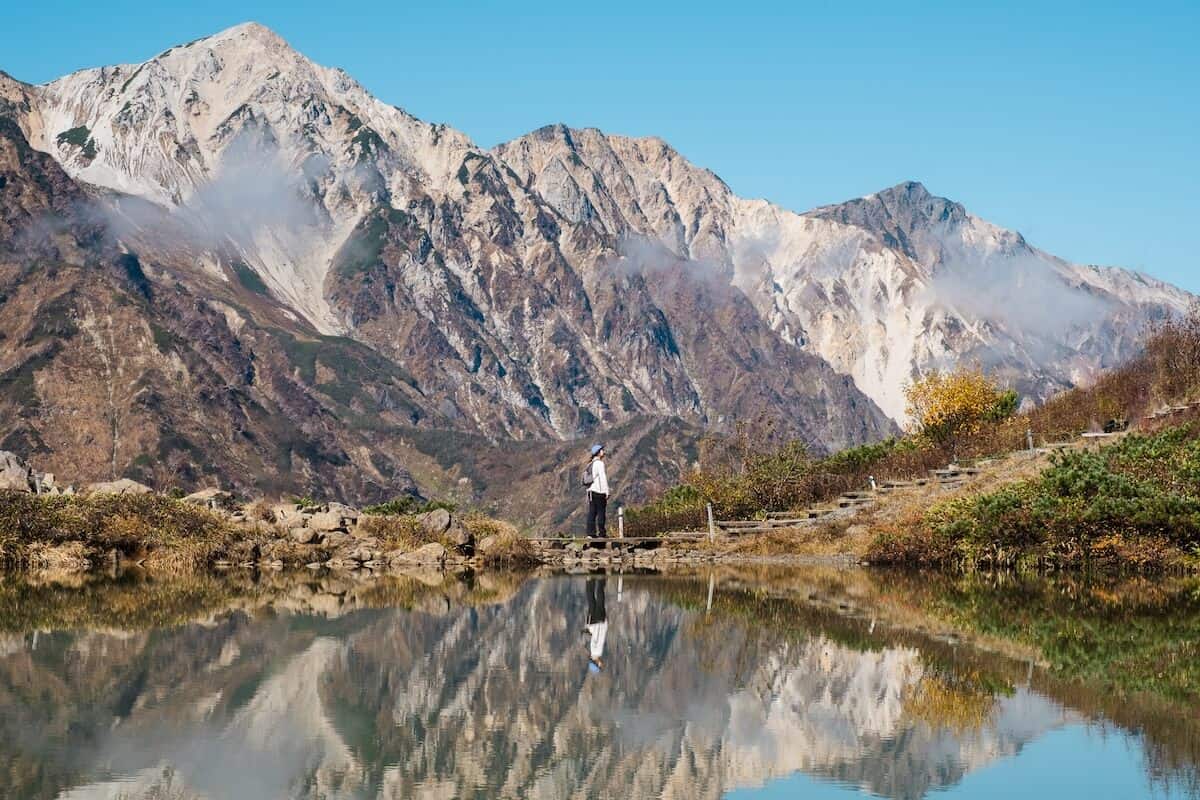
If you only have time for one hike in Hakuba, you need to check out Happo Pond. It’s the perfect introduction to the Japanese Alps and it’s one of the most photogenic hikes I’ve done in Japan. The highlight is definitely seeing the calm pond reflecting the towering Hakuba Sanzan peaks on a clear day.
You’ll start by taking the Happo-One ADAM Gondola, followed by two chair lifts (the Alpen Quad and Grat Quad). Tickets can be purchased at some hotels, or at the gondola station, and return trip tickets cost 3,400 yen.
The ride itself is a scenic experience as you’re surrounded by layers of fall foliage and distant peaks. Operating hours of the Happo Alpen Line vary each day, and you can check the schedule here.
Happo Trekking Course details
A) Happo Pond Trail
Once you reach the trailhead, it’s about a 2 to 3-hour round-trip hike to Happo Pond. The trail is rocky if you start in the anti-clockwise direction, but ends on a gentler downhill boardwalk path. If you choose to take the loop, you’ll be rewarded with ever-changing views of the peaks and the valley.
- Distance: 2 miles round trip (3.3 km)
- Duration: 2-3 hours round trip
- Elevation gain: 885 ft (270 m)
- Difficulty: Moderate
Click here to download offline trail map


B) Happo Pond to Mt Karamatsu Trail
For most people, Happo Pond would mark the turning point on the trail loop. However, if you’re prepared, you can also continue another 1.5 hours up towards Mt Karamatsu.
- Distance: 6.5 miles (10.5 km) round trip
- Duration: 6 hours round trip
- Elevation gain: 3,028 ft (923 m)
- Difficulty: Hard
Click here to download offline trail map

Happo Pond hiking tips
- Go earlier in the morning before the afternoon clouds roll in
- Bring water and snacks as there are no stalls past the lift stations
- Toilets are limited, with the last one at the Alpen Lift station
- Hiking poles can be helpful but not necessary
- Be patient and wait for the clouds to clear at Happo Pond for the iconic reflection view

2. Have a scenic lunch at Usagidaira Terrace
You’ll find Usagidaira Terrace right after you get off the Happo-One gondola. You’ll be able to get lunch at Cafe Yeti, and my favorite seat is in the corner as it looks out to the mountains.
We had lunch here after our hike, and got the wasabi beef bowl and curry katsu rice. I was actually surprised by how good the food is! You can also get coffee here, so even if you’re not planning to hike this is still a great spot to hangout.

3. Enjoy the view at Hakuba Mountain Beach
Another great way to see the Hakuba Valley is at Hakuba Mountain Beach. It’s also located at the top of the Happo-One gondola station at the Usagidaira Terrace. This lounge deck has parasols, beach chairs, and pool-like features that make it feel like a beach club. Except here, you’re surrounded by towering peaks.
You can get a variety of drinks here (including alcoholic and non-alcoholic). For a snack, order their Ham Croffle or even a soup combo. We tried the Hakuba Blueberry and Elderflower soda and laid back on the deck chairs while watching paragliders launch off the slopes.

4. Soak in Happo Onsen
After hiking and exploring, soaking in a Happo onsen hot spring surrounded by mountains is truly the best feeling. There are several onsens all over Hakuba Valley, with 4 main ones located in Happo:
- Obinata no Yu
- Sato no Yu
- Happo no Yu
- Mimizuku no Yu
These are gender-separated public onsens that can be accessed for a fee. We went to Mimizuku no Yu and really enjoyed the stunning Hakuba mountain view from the open air hot springs.
I highly recommend coming here to relax your muscles, especially if you don’t have an onsen in your hotel. Locals would tell you that the highly alkaline pH 11+ natural hot spring water is also said to have beautifying properties, so it’s worth a try.
In order to enjoy Japanese onsen respectfully, make sure to follow the local customs:
- Expect communal shower areas (swimsuits aren’t allowed)
- Shower beforehand so you’re clean before entering the onsen
- Keep your towel out of the water
- Ladies – keep your hair tied up
- Many onsens here are tattoo-friendly, but just check before entering
- Do not take pictures inside onsen facilities
5. Stay at Hakuba Mominoki Hotel
One of the most luxurious Japanese onsen hotel experiences (with outdoor and private onsens) can be found at Hakuba Mominoki Hotel. I like it here because the service is excellent, there are breakfast and dinner buffet options, and it’s located just a few minutes’ drive from the Happo-One gondola station.

If you want a comfortable stay with a touch of old-school charm, Hakuba Mominoki Hotel is a fantastic choice. We enjoyed our stay in the spacious Japanese and Western-style room (fits 2-6 guests) which features a separate living and bedroom area, plus two balconies on the corner of the building.

Another benefit of staying here is that they have hourly shuttle services that take you to various gondola stations, the Happo bus terminal, as well as the Hakuba train station. I highly recommend this stay for a first-time visit.

6. Take a walk in Oide Park
If you’re looking for a short, easy walk with postcard views, head to Oide Park. The area overlooks a small suspension bridge, the river, and the Hakuba mountain range in the background. It’s a really popular photography spot in fall for capturing the “snowliage” – when there’s snow on the peaks along with colorful foliage.

7. Drive to Donguri Panorama Observation Deck
Donguri Panorama Observation Deck is a hidden gem spot and unexpected viewpoint overlooking Hakuba Valley. It’s peaceful and quiet here, and we only got to know it through a local. There’s also a short trail from here, where you can enjoy the view of the mountains and see the river that runs through town.

8. Visit the Hakuba Ski Jumping Station
Another historically significant attraction in Hakuba is the Hakuba Ski Jumping Stadium. It’s located at the base of the Happo-One ski resort and was built for the 1998 Nagano Winter Olympics. You can get up to the top via chairlift and elevator, or simply hangout in the stadium. Occasionally, you may also see people training here.

9. Shopping and dining
Hakuba’s town center is small but surprisingly stylish, where you’ll find plenty of restaurants, cafes, and outdoor shops in Hakuba. It’s pretty clear that everyone here is passionate about the mountains.
After we were done soaking in Happo Onsen, we got drip coffee at Senjeu Cafe. Right next door, you have Kasamo Vintage with a selection of fashion and furniture. I love the curated pieces, including a headband I picked up – and we had a lovely chat with the friendly store owner.
In addition, my favorite type of shopping is at outdoor stores and Hakuba has plenty. I’m a huge fan of Snow Peak Landstation Hakuba, which is part cafe and part store, with an outdoor event space where tents are set up. Montbell Hakuba is another spot I enjoyed, and I love the huge glass windows that look out to the mountains.

For food, we got to check out these spots for lunch:
- Sanpachi Shoten: I love their Keema curry galette and the epic view through the windows
- Takahashi-ke: Slightly further away but their Spicy Tantan Noodle is worth it
Take note that there are fewer restaurants open during dinner, so eating at your hotel might be the easiest to avoid waiting a long time for seats. Nonetheless, we managed to get dinner at NEO"和"食堂 一成 and enjoyed their soba, tempura and tonkatsu set meals.
More activities around Hakuba Valley
Besides Happo-One, there are tons of other things to do and places to see in Hakuba Valley. If you’re looking to venture further and have a rental car, consider checking out these places.
10. Visit Lake Aoki
The “Three Lakes of Nishina” are another highlight in the Hakuba Valley area. They comprise Lakes Aoki, Nakatsuna, and Kibaki, just a 20-minute drive from Hakuba towards Omachi.
You can rent stand-up paddleboards or kayaks, or simply enjoy a coffee at Ao Lakeside Cafe while watching the water reflect the surrounding scenery. While Lake Aoki is the most popular, I recommend driving to see all three lakes if you have time.

11. Go paragliding
If you’re up for an adrenaline rush, Hakuba is a top spot for paragliding. While I didn’t get to go paragliding this time, I saw people take off from Usagidaira Terrace. Even as we were having coffee in town, we could see people gliding through the air.
Overall, this is a great way to enjoy a bird’s eye view of the fall foliage on the mountains, especially on a clear day. Remember to book this in advance, and keep in mind that flights depend on weather/wind conditions.

12. Rent a mountain bike or e-bike
If you don’t have a rental car, you can consider renting an e-bike to get around town. Fall is the perfect time to explore Hakuba’s countryside by e-bike. For example, you can bike to Lake Aoki and stop wherever you like for photos.
You can also go Mountain biking in Iwatake MTB Park where they have classes and guided sessions. When you need a break, head to the scenic Hakuba Mountain Harbor and grab a bite at City Bakery.
If you’re staying at Hakuba Mominoki Hotel, you can rent both e-bikes and mountain bikes there. It costs about 2,500 yen for a day (8 hours), subject to availability.
How to get to Hakuba from Tokyo
If you’re traveling from Tokyo to Hakuba, you’ve got a few options depending on your budget, comfort level, and whether you want to optimize for travel time.

After doing this route myself, I’ve found the Shinkansen bullet train + bus combo to be the most reliable and stress-free way to get there.
| Method | Time | Cost | Best for |
| A) Bullet Train + Bus (preferred) | ~3 hrs | 11,230 yen | Fastest and reliable |
| B) Azusa Direct Train | 3 hr 40 min | 8,050 yen | No transfers |
| C) Highway Bus | ~5 hrs | from 5,800 yen | Affordable |
| D) Rental Car | 3.5-5 hrs | from 7,800 yen per day + tolls | Flexibility |
Google Maps is also a great resource for route planning, and I recommend choosing a hotel in Tokyo that makes the transfer to Hakuba easy (i.e. Ueno/near Tokyo Station/Shinjuku).

A) Bullet train + bus
Tokyo/Ueno → Nagano → Hakuba (~3 hrs)
This is the fastest and most convenient way to get to Hakuba from Tokyo. It’s best for travelers who want speed, reliability, and a comfortable journey. This route takes you to Hakuba Happo Bus Terminal.
- Travel time: ~3 hr
- Cost: 11,230 yen (8,330 yen for Shinkansen + 2,900 yen for bus)
- Route – book here:
- Take the Hokuriku Shinkansen (from Tokyo or Ueno Station to Nagano Station)
- Transfer to the Nagano to Hakuba bus at Bus Stop #26 (East Exit)

Hokuriku Shinkansen: I recommend booking the Shinkansen bullet train tickets in advance so that you can secure a seat. Alternatively, you can also buy tickets at the station counter – though you risk seats running out, and you’ll have to factor in extra time if there’s a line. Even if reserved seating runs out, there’s some flexibility where you can still book standing tickets.
Nagano to Hakuba bus: It’s also best to buy a bus ticket in advance, though you can also buy it via a vending machine at Nagano Station. The Nagano to Hakuba bus runs every hour between 8:20am to 10pm in green season (see schedule here).
In order to arrive in Hakuba at about noon, we took the 9:26am Shinkansen from Ueno in order to make it for the 11am bus leaving Nagano Station.
Important: Book Shinkansen bullet train tickets in advance


B) Azusa direct train
Shinjuku → Hakuba via Azusa (3 hr 40 min)
If you prefer to have fewer transfers and the comfort of a train ride, the Azusa train is the most straightforward route. You’ll also get to enjoy scenic views as you get closer to the mountains. However there’s only one train per day, so you don’t have the same flexibility as the other transportation options.
- Travel time: 3 hr 40 min
- Cost: 8,050 yen
- Daily departures – book here:
- To Hakuba via Azusa 5: Leaves Shinjuku 8:00am, arrives Hakuba 11:40am
- From Hakuba via Azusa 38: Leaves Hakuba 1:41pm, arrives Shinjuku 5:25pm

Make sure to book your tickets in advance for a seamless journey, especially since there’s only 1 scheduled train per day.
We took this route on the way back to Tokyo because our hotel was going to be in the Shinjuku area. This allowed us to explore Hakuba a little more in the morning, and we arrived back in Tokyo in time for our hotel check-in and dinner.

C) Highway bus
Shinjuku → Hakuba Happo Bus Terminal (5+ hr)
Since we were tight on time, we didn’t consider the highway bus option but it could be a great way to save some money on transportation. It’s also a fuss-free way to travel if you have multiple pieces of luggage or do not wish to use a luggage forwarding service. However, departures are limited – check the Green Season bus schedule here.
- Travel time: 5+ hr (depending on traffic)
- Cost: from 5,800-7,000 yen
- Departure point: Shinjuku Expressway Bus Terminal
- Daily departures – book here
- To Hakuba: Leaves Shinjuku 7:35am, arrives Hakuba 12:48pm (or overnight bus from 11:05pm to 6:04am)
- From Hakuba: Leaves Hakuba 3:15pm, arrives Shinjuku 8:28pm (or night bus from 5:20pm to 10:33pm)


D) Rent a car
Renting a car is probably the most flexible option for getting to and around Hakuba. If you plan to spend more time exploring Hakuba Valley, having a car would be best for getting around. You can rent from any major city, including Tokyo and Nagano.
If you plan to drive from Tokyo to Hakuba, take note that tolls cost around 5,000 yen each way. A good hybrid option is to take the train to Nagano and rent a car from there.
- Travel time: 4+ hrs
- Car rental cost: from 7,800 yen (50 USD) per day – book here
- International driving license required

Conclusion
Hakuba in fall feels like a hidden gem, and after exploring all these spots, I’m convinced it’s one of Japan’s most underrated fall destinations. We loved waking up to the mountain views each morning, hiking on scenic trails, and even onsens with a view. Every moment here felt picture-perfect.
If we had more time, I’d definitely explore more of Iwatake and Tsugaike too. I hope this list of best things to do in Hakuba helps you plan an unforgettable fall getaway. When you’re there, say hello to Hakuba’s iconic mascot, Victoire Cheval Blanc Murao III, for me!


