

Where to Stay in Tokyo: 9 Best Areas for First-Time Visitors (& How To Choose)
Trying to figure out where to stay in Tokyo can feel as overwhelming as navigating the train station map – and I remember feeling that way the first time.
After multiple trips to Tokyo, we’ve stayed in Ueno, Asakusa, Shinjuku, Takadanobaba, Ikebukuro, and Odaiba, and my opinion on where to stay has definitely changed since my first trip.
I used to focus mostly on whether a hotel was close to the major sights. Now, I pay much more attention to the choice of train station as a base, ease of airport access, room size, and where I’ll actually spend my evenings eating and shopping.
Here’s where I’d stay in Tokyo based on the kind of trip you’re planning, plus the trade-offs I noticed after actually staying in these neighborhoods.
This article uses affiliate links where I make a small commission if you make a purchase through my links, at no additional cost to you. As an Amazon Associate I earn from qualifying purchases.
Where to stay in Tokyo at a glance
There isn’t one neighborhood in Tokyo that works best for everyone. If you only want the quick answer, these are the areas I’d narrow it down to based on what matters most to you.
For a quick pick: I’d look at Ueno for transportation, Asakusa for budget, Ginza for food and shopping, and Takadanobaba if you want easy access to west Tokyo without actually staying in Shinjuku.
| Area | Best for | Main drawback | Where we stayed/hotel pick |
|---|---|---|---|
| Ueno | Transport & Narita access | Quiet at night, farther from west Tokyo | Hotel Resol Ueno |
| Ginza & Tokyo Station | Food, shopping & a central base | Pricier hotels and food | Hotel Musse Ginza Meitetsu* |
| Asakusa | Budget stays & traditional Tokyo | Small rooms, far from west Tokyo | Tamayura Hotel Asakusa |
| Shibuya | Shopping, nightlife & west Tokyo | Crowded and expensive | Shibuya Stream Hotel* |
| Ikebukuro | Shopping & airport buses | Little to do beyond Sunshine City | Sunshine City Prince Hotel |
| Takadanobaba | A quieter alternative to Shinjuku | Few sights nearby | Sotetsu Grand Fresa Takadanobaba |
| Shinjuku | Nightlife & west Tokyo | Very crowded, touristy in parts | Hotel Gracery Shinjuku |
| Akihabara | Anime, gaming & electronics | Too niche as a whole-trip base | JR-East Hotel Mets Premier Akihabara* |
| Odaiba | Bigger rooms & families | Far from central Tokyo | Hilton Tokyo Odaiba |
*Hotel pick: we haven’t stayed here yet.
How to choose where to stay in Tokyo
After staying in several parts of Tokyo, I think the ideal neighborhood depends on your travel style and itinerary. I’d start by looking at where you’re likely to spend the most time, and whether you intend to take trips out of Tokyo.
We’ve booked hotels with supposedly great locations, but it just wasn’t the most convenient for us. Sometimes it also depends on the budget, but that’s why there are a few ways to narrow down your options.
Stay near where you’ll actually spend your time
It seems obvious to choose a hotel based on Tokyo’s headline attractions, but I’d also think about where you plan to eat, shop, and spend your evenings.
We’ve always found Ueno incredibly convenient from a transportation perspective, but over several Tokyo visits, I noticed that a lot of the restaurants and shopping we wanted were around Ginza. This is one reason we’re trying Ginza on our next trip, even though it’s a little more expensive.
If you already have a rough itinerary, put your hotel options into Google Maps and check several of your planned destinations.
Look at the station, not just the neighborhood
These days I care more about the exact train station, because Tokyo neighborhoods can be huge. Saying that a hotel is “in Shinjuku” doesn’t necessarily tell you how convenient it will be.
Personally, I think a hotel right beside a well-connected station entrance can sometimes be easier than staying around a huge transport hub that takes forever just to navigate.
For example, Hotel Resol Ueno is a hotel we’ve booked more than once because it’s about a one-minute walk from JR Ueno Station and around six minutes from Keisei Ueno Station. On one of our trips, we hadn’t purchased Shinkansen tickets in advance, and planned to go to JR Ueno Station early to get them. That was when I realized how useful proximity was for us.
We had a similar experience in Takadanobaba. Sotetsu Grand Fresa Takadanobaba is around a one-minute walk from the JR, Seibu Shinjuku, and Tokyo Metro stations. So you still get very convenient transport even without staying in the middle of Shinjuku.
Check airport transportation before you book
If you’re arriving with large suitcases, you could consider how easy it is to get from the airport to the hotel. Specifically, does the airport transportation have a direct line or bus route to the hotel?
Ueno is one of my favorites for Narita because Keisei Ueno gives you straightforward access to the Skyliner.
You can also look out for hotels with Airport Limousine Bus access. We only found out about this after staying at Sunshine City Prince Hotel in Ikebukuro, where the hotel has direct airport limousine buses serving both Narita and Haneda.
While you might be fine with dragging luggage through a train station, having a bus pick you up directly outside your hotel can make it so much easier.
Pay attention to room size
Whenever I look at hotel room options in Tokyo, I always check the room size in square meters before booking. We’ve stayed in hotel rooms that were around 15 m², which sounds fine until you try to open two suitcases at the same time. There was barely enough usable floor space once our luggage was out.
That said, I wouldn’t necessarily avoid a 15 m² room for a short trip, especially if it makes sense for your budget.
Overall though, if you’re traveling with several large suitcases, staying for a week, or doing a longer Japan trip where you’ll be repacking frequently, I’d seriously consider paying a little more for extra space.
Hotel photos are also not particularly helpful for judging this as they tend to look larger than the reality. That’s why I recommend looking at the actual square footage or square meters for an apples-to-apples comparison.
1. Ueno: best for transport convenience

If transportation is one of your biggest priorities, Ueno is one of my favorite areas to stay in Tokyo.
We stayed at Hotel Resol Ueno, and I really liked the location. It worked well for getting around Tokyo, getting to Narita, and even when we were traveling outside the city to places like Nagano and Hakuba.
Pros of staying in Ueno
From Narita Airport, we just took the Keisei Ueno Skyliner and it took about 1 hour. Alternatively, if you’re coming from Haneda, this is also just 40 minutes away.
- JR lines
- Tokyo Metro access
- Shinkansen services at Ueno Station
- Keisei Ueno nearby for the Skyliner to Narita
Ueno also makes sense if your itinerary includes places on the eastern side of Tokyo, including Asakusa and Akihabara. It also feels much less overwhelming than big transport hubs like Shinjuku or Shibuya.
Cons of staying in Ueno
While Ueno is really convenient for transportation, we realized it gets quiet relatively early in the night. We also find that we keep traveling out to other parts of Tokyo for restaurants and shopping. Some people might find it charming, but it feels less modern relative to places like Shinjuku, Shibuya, or Ginza.
I still think Ueno is one of the most practical Tokyo bases, but I recommend putting it into Google Maps first to see if it makes sense for your itinerary.
Where we stayed: Hotel Resol Ueno
Hotel Resol Ueno is one of the Tokyo hotels I’d book again primarily because of its location. It’s best for travelers who care about train access and want to be very close to Ueno Station.
We had initially booked this hotel because I needed to work remotely for two days, and it was a great choice because of the strong wifi. The lobby area also had tables for working and plenty of charging points. They even provide free soup through the day, and you can walk a few minutes to the nearest 7-Eleven for a snack.
What I liked most was simply how easy it was to get around. There could have been cheaper alternatives, but being able to walk to JR Ueno Station early the next morning to get last-minute Shinkansen tickets was worth it. We also had a great time exploring the nearby cafes and ramen shops, and it felt like a cozy little spot tucked away from the busy streets.
If your itinerary includes regional travel or you’re flying through Narita, I’d recommend staying at Hotel Resol Ueno.
2. Ginza & Tokyo Station: best for food, shopping, and a more central base
I’ve never really considered myself a Ginza type of shopper, because I used to associate it with high-end shopping. However, our last couple of trips have shown us that we really like visiting Ginza for the food, flagship store shopping, and artsy coffee shops.
Instead of staying somewhere cheaper and traveling back and forth, on our next trip we’re testing whether it makes more sense to base ourselves there.
Pros of staying in Ginza

Not only is Ginza the center of Tokyo with great transportation connectivity, but you’ll also have lots to do there.
It puts you close to areas like Tsukiji and Tokyo Station, making it easy to get to and from destinations outside Tokyo.
I have so many starred places on my Google Maps in Ginza. I recommend choosing to stay here if your Tokyo trip is focused on food, shopping, cafes, and nicer evenings out.
Cons of staying in Ginza
Some of the shopping areas can get incredibly busy, similar to Shinjuku and Shibuya. I personally didn’t enjoy my time in the flagship Uniqlo store, even though I’m a huge fan. If I were to go, I’d pick a really early time slot, and avoid the peak periods.
Besides that, if you’re price conscious, Ginza would not be very enjoyable since the restaurants, cafes, and shopping are likely to be more expensive relative to other parts of Tokyo. The hotel prices are also higher here, but if you are able to get a hotel redemption (e.g. at Hyatt Centric Ginza) or manage to snag discounted prices, staying in Ginza will be a worthwhile experience.
Hotel pick: Hotel Musse Ginza Meitetsu
We picked Hotel Musse Ginza Meitetsu since it has the convenient Ginza location, and you can save by booking a room with a shared bathroom.
The hotel is roughly six minutes on foot from Ginza, Higashi-ginza, and Shimbashi stations. A perk I’m looking forward to is direct access from Haneda Airport to Higashi-ginza without a train transfer.
Some of the places in Ginza we’re looking forward to visiting near the hotel are:
- Glitch Coffee and Roasters GINZA
- Miyagawa Honten (Unagi eel restaurant)
- NunoTsune (Soba noodle restaurant)
- Fukumimi Ginza 1 (Yakitori restaurant)
- Manten Sushi Marunouchi (omakase sushi)
3. Asakusa: best for budget travelers

Of all the Tokyo areas I’ve stayed in, Asakusa has been the most budget-friendly. You can find all kinds of accommodation here, from young hostels to established business hotels, and even super minimal and tech-forward hotels like the APA chain.
I also like that it feels noticeably different from the modern shopping districts. You’re close to Senso-ji and older streets, and there’s much more of the traditional Tokyo atmosphere people often picture before their first trip.
Pros of staying in Asakusa

If you’re looking to stretch your dollar in Tokyo, Asakusa is probably the best place to stay – since hotel costs make up such a big part of your spending here.
My first experience staying here was in an APA Hotel. I remember it feeling like such a steal as we had a view of the river (and the Flamme d’Or) from our room, despite paying just over $100 USD/night. It’s also a nice base if your sightseeing is focused on the eastern side of Tokyo. On one of our 5-day Tokyo trips, we managed to combine Asakusa, Ueno, and Akihabara, and found it lots of fun.
Transportation wise, we really like that it’s one of the easiest spots for accessing Narita Airport. There’s a direct train that only takes about 1 hour. Another big perk for staying in Asakusa is that you’ll have easy access to the Tobu-Nikko express train line. It takes you to Nikko National Park – one of the best weekend/side trips from Tokyo.
Cons of staying in Asakusa
Similar to Ueno, which also has a bit of the traditional Tokyo vibe, many of the shops and attractions close earlier in the night. If your itinerary involves visiting many of the spots in west Tokyo like Shibuya and Shinjuku, staying in Asakusa would mean a 30-45 minute train ride.
Where we stayed: Tamayura Hotel Asakusa

We’ve stayed in a few hotels in Asakusa, including APA Hotel. The one I’d recommend for the best balance of price and convenience is Tamayura Hotel Asakusa, also known as Asakusa Hotel Hatago.
While the room sizes were on the smaller side (the typical Tokyo 15m² size), we found that we were able to fit comfortably in the room by moving some furniture around. We also had our luggage delivered to the hotel (via Ta-Q-bin), and the hotel did a good job of taking care of them even before we checked in.
It was also a convenient 2-minute distance away from the train station entrance, and about 6 minutes from Senso-ji Temple.
Who should stay in Asakusa

I’d choose Asakusa if keeping hotel costs down is more important than being in the middle of Tokyo’s nightlife and shopping. It’s especially good for first-time visitors who want easy access to Senso-ji, eastern Tokyo, and Narita Airport.
I’d be more hesitant if your itinerary is heavily focused on Shibuya, Shinjuku, Harajuku, and the western side of the city. The train rides add up both in time and fatigue, so we eventually started looking at other neighborhoods for our other trips.
4. Shibuya: best for shopping, nightlife and west Tokyo

Shibuya is probably one of the easiest areas to recommend if you want to be right in the middle of Tokyo’s shopping, restaurants, and nightlife.
We’ve visited Shibuya plenty of times, but I haven’t actually stayed overnight here, so I can’t give the same firsthand hotel perspective. Based on location though, it makes the most sense for travelers who already know they’ll be spending a lot of time around Shibuya, Harajuku, Omotesando, and the west side of Tokyo.
Pros of staying in Shibuya
The biggest advantage is how much you can do without traveling very far.
Shibuya itself has department stores, cafes, restaurants, Shibuya Sky, and plenty of shopping. Harajuku and Omotesando are also close enough that you could even walk between them if the weather is nice. Shibuya Station also connects to JR lines as well as the Ginza, Hanzomon, and Fukutoshin subway lines, among others.
If you like staying out later, Shibuya makes sense with more things to do at night. You won’t need to plan your evening around getting across Tokyo before you get tired.
I’d especially consider Shibuya if a lot of your saved restaurants and shopping are already on this side of the city.
Cons of staying in Shibuya
The obvious downside is that Shibuya is busy.
If you’re put off by the idea of huge crowds, I wouldn’t choose Shibuya. The station itself is huge, and the streets around the Scramble Crossing can be packed even when you’re just trying to get from one place to another.
Hotels also tend to be more expensive here than places like Asakusa, so I’d check whether you’re actually going to use the location enough to justify the difference. Personally, I wouldn’t pay extra to stay in Shibuya if I only planned to visit the neighborhood once or twice.
Hotel pick: Shibuya Stream Hotel
I haven’t stayed here, but Shibuya Stream Hotel is one of the hotels I’d shortlist because of its station access. It’s directly connected to Shibuya Station’s New South Exit and Exit C2, with the walk from the JR New South ticket gate taking around one to two minutes.
That way, you’re not adding another 10- or 15-minute walk on top of the time it takes to actually get out of the huge station.
5. Ikebukuro: best for shopping and easy airport transport

Ikebukuro gets less attention than Shinjuku, but I think it can be a really practical place to stay. It’s just 1 stop from Shinjuku (a 5-minute ride), so in a way, you get the convenience of Shinjuku at a lower cost.
Pros of staying in Ikebukuro
You still get the convenience of a major Tokyo station, but I found the area less intense than staying in Kabukicho (Shinjuku).
Ikebukuro is useful for accessing the western side of Tokyo, and from here you can get to Shinjuku quickly without actually having to stay there.
There’s also a lot of food and shopping around the station. Sunshine City in particular is basically a destination on its own. If the weather is bad or you’re tired after a full sightseeing day, you have restaurants and shops close to the hotel rather than needing another train ride.
Cons of staying in Ikebukuro
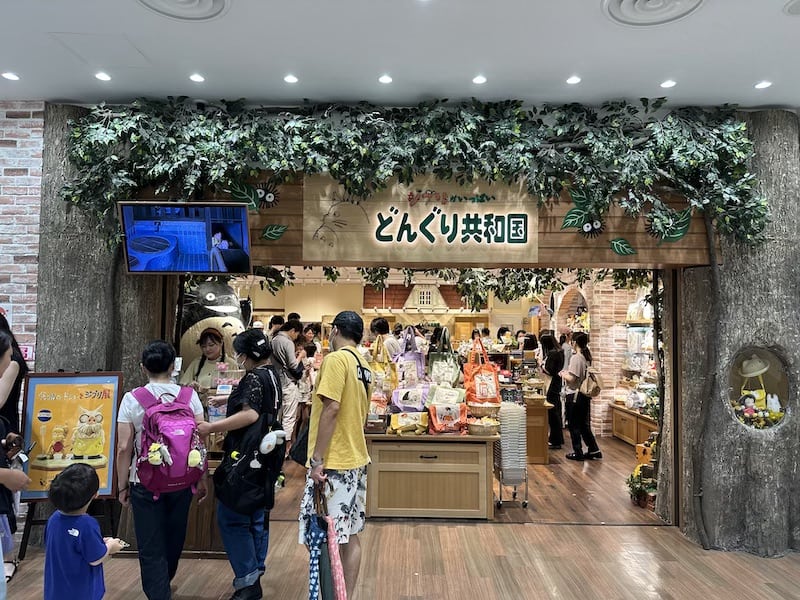
Other than the large shopping mall (Sunshine City) and the aquarium, I don’t find that there’s much to do in Ikebukuro. It doesn’t necessarily have the same traditional atmosphere as Ueno or Asakusa, nor does it have the same trendy vibe as Ginza.
If anime and Japanese cartoons annoy you, you’ll probably want to skip Ikebukuro. I personally like the Ghibli stores and the cartoon-themed dessert stores, so this didn’t put me off at all.
Where we stayed: Sunshine City Prince Hotel
Sunshine City Prince Hotel makes for a practical stay because the Airport Limousine Bus stops directly outside the hotel and currently serves both Narita and Haneda airports.
I personally think Tokyo’s Airport Limousine bus transfers are underrated, especially if you have multiple pieces of luggage. You could avoid taking your suitcases through the station, finding elevators, and making train transfers.
The hotel is also connected to Sunshine City, so there’s plenty nearby if you want an easy dinner or some shopping without going far.
The one thing we didn’t realize is that Sunshine City Prince Hotel isn’t right beside JR Ikebukuro Station, but an eight-minute walk away. Alternatively, Higashi-Ikebukuro Station is only around three minutes away.
6. Takadanobaba: a good alternative to Shinjuku
If you want easy access to Shinjuku without actually staying in Shinjuku, another place I’d recommend is Takadanobaba.
Pros of staying in Takadanobaba
Takadanobaba is on the JR Yamanote Line, and you can get to Shinjuku quickly without dealing with the Shinjuku crowd every time you walk outside your hotel.
So while Takadanobaba doesn’t show up as often on lists of the “best areas to stay in Tokyo,” it puts you surprisingly close to a lot of the same places.
Similar to Ikebukuro, the neighborhood attracts a big student population thanks to nearby Waseda University, so there are plenty of casual restaurants and ramen spots around the area. Tokyo’s official tourism guide even lists Takadanobaba as one of the city’s better-known ramen areas.
I like this kind of area because you still have things to eat and do around the hotel. But it doesn’t feel like you have to fight through a tourist crowd every time you leave.
Cons of staying in Takadanobaba
The trade-off is that Takadanobaba doesn’t have many of the attractions most first-time travelers come to Tokyo specifically to see.
That means you’ll most likely need to travel out of the hotel area each day.
If you want to walk out of your hotel and immediately see Tokyo Tower, Senso-ji, luxury shopping, or neon nightlife, this probably isn’t the area for you.
However, if you mostly want a convenient place to sleep with good train access and plenty of casual food nearby, I think this area is perfect for it.
Where we stayed: Sotetsu Grand Fresa Takadanobaba
Sotetsu Grand Fresa is around a one-minute walk from the JR Yamanote Line, Seibu Shinjuku Line, and Tokyo Metro Tozai Line. Getting to Shinjuku is roughly five minutes by train, to Ikebukuro about four minutes, and to Shibuya around 12 minutes.
The hotel prices were around $200 per night, so it was reasonable for a stay that was so close to the station. It literally felt like I could get to the train station just by crossing the street, and I don’t think I’ve had a more convenient hotel location in Tokyo.
Nearby, we had a Big Box shopping mall, and we went there to do a lot of our last-minute souvenir shopping. I’d most likely choose this hotel again if I wanted to be on the west side of Tokyo.
7. Shinjuku: convenient, but I wouldn’t choose it again

Shinjuku is probably one of the most recommended places to stay in Tokyo, especially for first-time visitors.
The transport connections are excellent, there’s endless nightlife, and it’s convenient for places like Harajuku and Shibuya. But after staying there myself, I don’t think Shinjuku is worth prioritizing unless you specifically want the nightlife and atmosphere.
Pros of staying in Shinjuku

If nightlife is a major part of your trip, Shinjuku is definitely convenient. You can stay out later without worrying about making a long train journey back to your hotel, and there’s an endless amount happening around the station.
If you’re planning to take day trips out to places like Kawaguchiko or even side trips to Matsumoto, staying close to the Shinjuku Bus Terminal can be very convenient.
There’s also so much shopping that can be done in Shinjuku, like:
- HANDS Shinjuku Store (home goods store)
- Snow Peak LUMINE Shinjuku (camping and outdoor store)
- mont-bell Shinjuku minami-guchi (outdoor apparel store)
Food-wise, you can also look forward to exploring Omoide Yokocho Memory Lane, a narrow historic alley filled with yakitori grill shops and bars.
Cons of staying in Shinjuku
The biggest downside for me was probably the crowds because Shinjuku is busy basically all the time.
We expected staying in Shinjuku to be convenient because the hotel is technically only five minutes from the station. But we found that navigating Shinjuku Station and the streets around it can make that journey feel much longer.
I also found the food immediately around Shinjuku to be way more touristy than the places we were finding in neighborhoods like Ueno or Ginza.
If you’re traveling to Tokyo with young ones, you definitely want to try avoiding hotels near Kabukicho as it’s a red-light district. It ranges from night workers standing along major streets and corners, to unexpected seedy massage shops near the restaurants you randomly chose to grab dinner at.
I know some people specifically want the neon lights, bars, entertainment, and late-night energy, so it might not be all that bad.
Personally though, I feel better not having to pass through that atmosphere outside my hotel every night. That’s why I’d rather visit Shinjuku when I want to and stay somewhere calmer.
Where we stayed: Hotel Gracery Shinjuku

We stayed at Hotel Gracery Shinjuku, which is probably one of the easiest hotels in Tokyo to recognize because of the giant Godzilla head above the building. I was initially excited to book that hotel because I’d seen that Godzilla head so many times during our visits to Shinjuku.
When it comes to staying in Shinjuku, the closer you are to Kabukicho, the less expensive the hotels get. I didn’t understand why then, but I now see how it affects the experience. It also wasn’t as convenient as expected, since we still had to lug our suitcases for about 8 minutes after getting out of the station.
That said, the room itself was amazing and we had a great view of the city through our windows. The bathroom was also spacious and the staff were really helpful. It’s really nice to have lots of dining options right downstairs – though they might be pricey and touristy.
Overall, if I wanted easy access to west Tokyo again, I’d probably compare Shinjuku hotel prices against Takadanobaba before booking.
Who should stay in Shinjuku
I don’t think Shinjuku is a bad choice. I just don’t think it should automatically be everyone’s first choice.
If nightlife, shopping, and west Tokyo make up a big part of your itinerary, it makes sense. There’s plenty to see and do, and I enjoyed shopping and soaking in the atmosphere here during my first visit.
If you’re choosing Shinjuku because you’ve simply heard that it’s the most convenient place to stay in Tokyo, I’d map out how far the hotel is from the train station before deciding.
8. Akihabara: best for anime, gaming and electronics
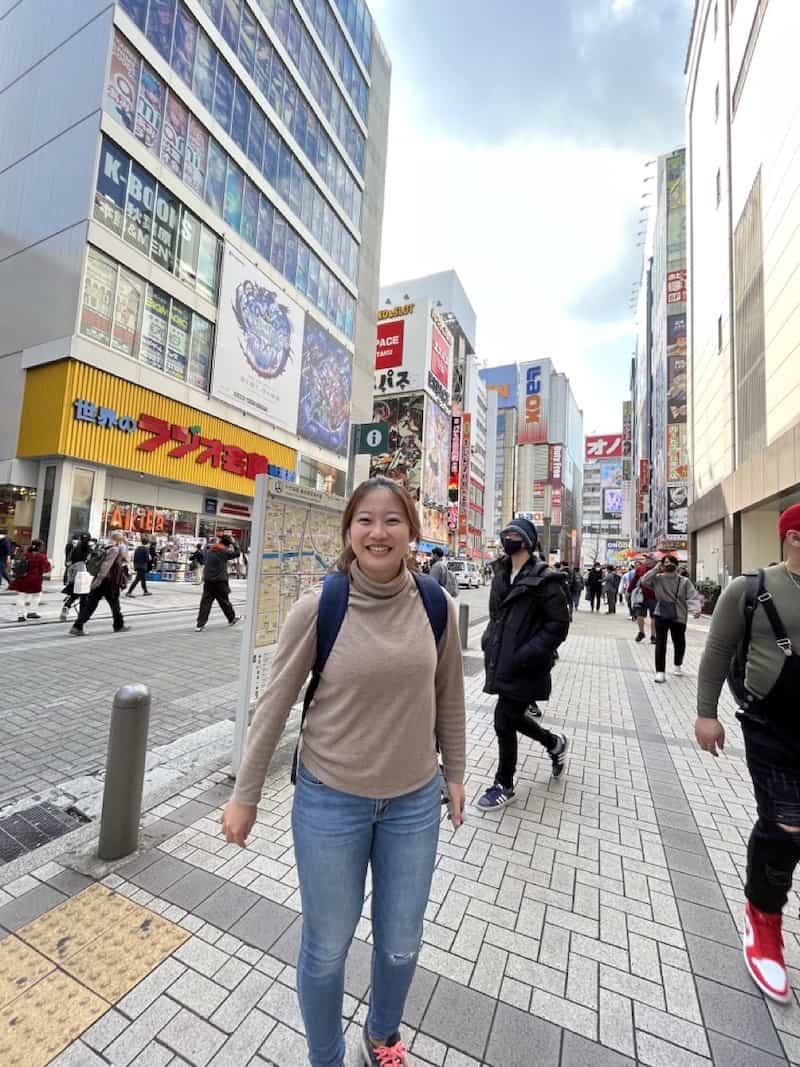
If anime, gaming, electronics, or collecting are a major part of your Tokyo trip, staying in Akihabara can be very convenient.
We’ve visited Akihabara as part of our Tokyo itineraries, but haven’t stayed overnight here. So I’d only choose it as a base if you expect to spend quite a lot of time in the area.
Pros of staying in Akihabara

The biggest advantage is that Akihabara is actually very well connected.
Akihabara Station has the JR Yamanote, Keihin-Tohoku, and Sobu lines, plus the Tokyo Metro Hibiya Line and Tsukuba Express. Tokyo Station is only around four minutes away, while Ueno is roughly three minutes away by JR.
And obviously, if you want to spend hours browsing figures, manga, arcades, gachapon, or electronics stores, being able to walk back to your hotel instead of carrying everything across Tokyo is useful.
Cons of staying in Akihabara
If you’re only planning to spend half a day here, it’s easy enough to reach from Ueno, Asakusa, Tokyo Station, or plenty of other neighborhoods.
The area is very focused on a particular side of Tokyo culture, so it may not give you the variety you’d get from staying somewhere like Ginza or Shibuya.
Hotel pick: JR-East Hotel Mets Premier Akihabara
If I were staying here, I’d narrow down to JR-East Hotel Mets Premier Akihabara. The location is hard to beat as it’s around one minute from the South Exit of JR Akihabara Station.
If you’re planning to buy a lot of things in Akihabara, it’s really convenient when you can take breaks at your hotel and drop bags instead of carrying them around all day.
9. Odaiba: best for bigger rooms, but not my favorite location

Our stay in Odaiba was probably the biggest contrast to the smaller Tokyo hotel rooms we had experienced elsewhere. It felt like the more modern side of Tokyo, with lots to do in the area – but didn’t feel like it had much personality.
Pros of staying in Odaiba
If you’re looking for a bigger room at a decent rate, Odaiba is where you’ll want to look.
Odaiba also feels spacious compared to central Tokyo, as the streets, waterfront, shopping centers, and hotels all feel newer and more spread out. For families who want a larger room and plan to spend time around Tokyo Bay, that could work really well.
You’ll find tourist attractions like:
- The Gundam Base Tokyo
- “Statue of Liberty”
- teamLab Planets TOKYO
- Kidzania Tokyo
Cons of staying in Odaiba
Since it was our first time in Tokyo, we wanted to explore the city center, including Tsukiji Market, shopping in Shibuya and Shinjuku, and checking out the anime culture in Akihabara. But that meant that every day we had to take the train out of Odaiba – which was surprisingly expensive and time consuming.
It felt less convenient than staying somewhere on the main Tokyo train network, especially when we were heading into the city every day. I also didn’t feel like Odaiba had the Tokyo atmosphere I was looking for.
There are lots of modern malls and newer developments, but it felt very different from walking around Asakusa, Ueno, Ginza, or even Shinjuku.
It was definitely comfortable though, and some people might like staying here to get away from the busy Tokyo streets.
Where we stayed: Hilton Tokyo Odaiba
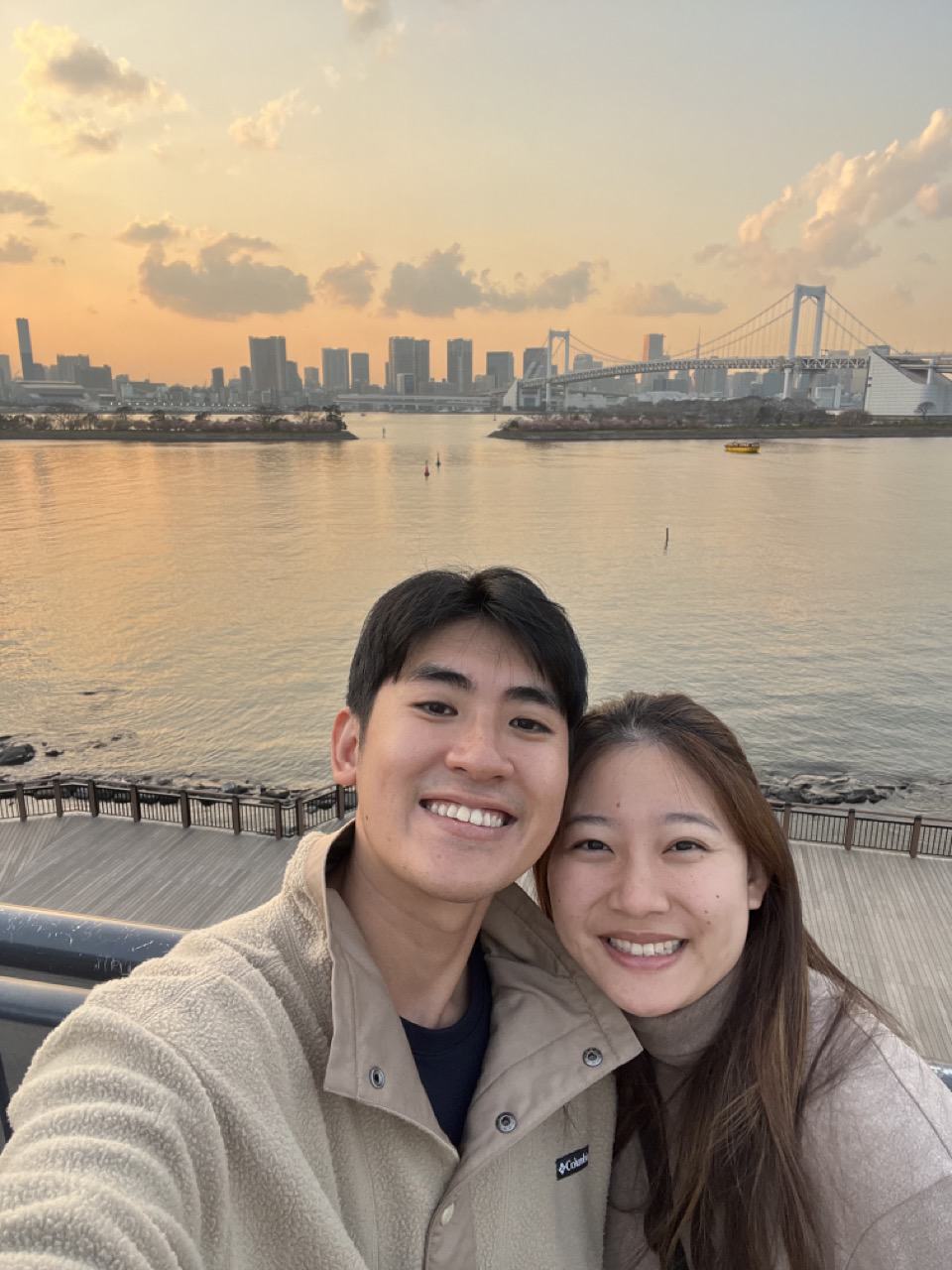
We stayed at Hilton Tokyo Odaiba where our room was the most spacious out of all our Tokyo hotels. Our room even had a balcony, and the lobby area was huge – exactly what you’d expect from a large hotel chain.
Hilton Tokyo Odaiba is also directly connected to Daiba Station on the Yurikamome Line, so you don’t have a long walk between the hotel and the train. The hotel also has a waterfront setting, so the whole stay felt relaxing.
Where I’d stay in Tokyo for different types of trips
After staying in these different areas, I’d choose based on the logistics of the trip rather than trying to find one neighborhood that wins at everything.
- For a first trip to Tokyo: Asakusa or Takadanobaba
- For bus day trips to places like Kawaguchiko: Shinjuku
- For a budget trip: Asakusa
- For food and shopping: Ginza
- For easy Narita Airport access: Ueno or Ikebukuro
- For larger hotel rooms: Odaiba
Should you split your Tokyo stay between two neighborhoods?

I wouldn’t change Tokyo hotels just for the sake of trying multiple neighborhoods as packing everything and moving across the city takes time too. But if you are taking some side trips book-ended by time spent in Tokyo, it could make sense to split your Tokyo stay between two neighborhoods.
We’ve done this before for a longer trip – where we spent 4 nights in Ikebukuro, then 2 nights in Asakusa. One of the reasons was that we wanted to save money, and each night in Asakusa cost about half the price of our Ikebukuro stay.
While we stayed in Ikebukuro, we went on a day trip to Kawaguchiko, explored Akihabara, Shinjuku and Shibuya.
Afterwards, we also took a trip to Nikko National Park from Tokyo. Since Asakusa Station connects really conveniently, it made sense to stay there before our flight out via Narita Airport. There was plenty for us to explore in the Ueno and Asakusa area as first-time visitors, and we had a great time.
FAQ: where to stay in Tokyo
These are some of the questions I’d asked before choosing a Tokyo hotel, especially during our first trip.
What is the best area to stay in Tokyo for first-time visitors?
For transport, I like Ueno – though it really depends on where you’re planning to go. For food and shopping, I’d consider Ginza (get your dining budget ready). For a lower hotel budget, I’d look at Asakusa for affordable stays.
If you’d rather pick Shinjuku or Shibuya, I’d recommend putting your itinerary into Google Maps to see how much time transportation will take, to see if it makes sense.
Is Shinjuku or Shibuya better to stay in?
Both are convenient if you want shopping, nightlife, and proximity to western Tokyo, but I personally wouldn’t prioritize Shinjuku after staying there.
I found it extremely crowded, the immediate dining scene felt touristy in places, and I didn’t particularly enjoy being around Kabukicho.
While I haven’t stayed in Shibuya, it seems more sophisticated, and a lot of the shopping we enjoy is also found here. If my budget allows, staying in Shibuya would be preferred over Shinjuku/Kabukicho.
Is Asakusa too far from everything?
Not if your itinerary includes places like Ueno, Akihabara, and eastern Tokyo. It does become less convenient if you’re traveling to Shinjuku, Shibuya, and other western neighborhoods every day.
I do think you’ll find great value in Asakusa, but do check your itinerary before choosing it purely based on pricing.
Is Ueno a good area to stay in Tokyo?
I think Ueno is a really practical area to stay in for ease of getting in and out of Tokyo. For example, we’d taken a quick stay at Hotel Resol Ueno after arriving at Narita, before taking the train out to Nagano via JR Ueno.
Hotel Resol Ueno was perfect for us because of the train access, where JR Ueno is about a minute away and Keisei Ueno is roughly six minutes away. Getting to and from Narita Airport was also really straightforward.
Is Ginza a good place to stay in Tokyo?
Ginza is the area we’re trying on our next trip because we realized we already spend a lot of time there for eating and shopping.
It tends to be more expensive than Asakusa, but paying more can make sense if it significantly reduces the amount of train travel you do every day.
How big should a Tokyo hotel room be?
There isn’t one perfect number, but I’d be cautious around 15 m² for two people with large luggage.
We managed rooms around that size in Asakusa, but two open suitcases took up most of the usable space.
If you’re traveling light, that may not bother you at all. But if you’re bringing large checked bags, I recommend looking for something larger assuming the price difference is reasonable.
Is Odaiba a good area to stay in Tokyo?
Our stay at Hilton Tokyo Odaiba gave us so much more room, and I can see it working well for families or anyone spending significant time around Tokyo Bay.
But if this is your first time to Tokyo and you’d rather do more of the typical Tokyo sightseeing, you’d save time and money by staying in the city center.
How close should my Tokyo hotel be to a train station?
I personally try to stay within around five to ten minutes of a train station if possible (and closer is even better when I have luggage).
This was something I only came to appreciate a while later, when I felt the fatigue of making that walk at least twice every day between the hotel and the train station.
In my experience, after a full sightseeing day, the difference between one minute and fifteen minutes from the station feels pretty significant.
So, where should you stay in Tokyo?
Choosing where to stay in Tokyo isn’t always a straightforward answer, but so far here are the defaults that come to mind now that we’ve been there multiple times.
If I wanted easy transportation, I’d go back to Ueno. If I wanted to keep hotel costs lower, I’d look at Asakusa. For our next trip, we’re trying Ginza because that’s where we already spend a lot of our time eating and shopping.
I’d also consider Takadanobaba instead of Shinjuku if you want quick access to west Tokyo without staying right in the middle of the crowds.
And while our hotel in Odaiba gave us the most space, I’d only stay there again if the trip specifically revolved around Tokyo Bay.
The biggest thing I’ve learned is to stop choosing a Tokyo hotel based only on which neighborhood is supposed to be the “best.”
Instead, look at where you’ll actually spend your days, how you’ll get to the airport, and whether two suitcases can realistically fit inside your room.


